Author: admin

  • How to Throw an Event Your Introverts Will Actually Enjoy

    How to Throw an Event Your Introverts Will Actually Enjoy

    (Spoiler: it doesn’t involve mandatory trust falls or forced karaoke)

    At Thread Events, we’ve run hundreds of workshops designed to help teams connect — from high-energy innovation sprints to slow, reflective sessions where someone finally admits, “I actually hate icebreakers.” And every time we run a team-building event, one truth quietly emerges like a cat at a dinner party: introverts are watching everything.

    They’re taking it in, analyzing the vibe, silently judging your playlist. They’re valuable, thoughtful, and essential to any healthy team — yet our industry has a long history of “energizer” events that make introverts wish for an urgent dentist appointment.

    So, let’s fix that. Here’s how to design a team-building event your introverts will actually enjoy, rather than simply endure.


    1. Start with “psychological oxygen”

    Extroverts get energy from others; introverts recharge alone.

    That doesn’t mean they dislike people — it means their batteries drain faster in high-stimulation environments.

    When planning your event, treat quiet time the same way you treat coffee: essential, restorative, and not optional.

    • Offer reflection breaks between activities.

    • Leave open space in the schedule — literally label it “Solo recharge.”

    • Create a calm zone with comfortable seating or a silent creative activity like sketching or journaling.

    It’s not about babying anyone — it’s about giving everyone the oxygen they need to participate fully.


    2. Redefine “engagement”

    Not everyone needs to wave their hands, shout ideas, or act out scenes from The Office to be engaged.

    Introverts often contribute best through writing, designing, or small-group problem-solving. If you want genuine involvement:

    • Replace “shout out your ideas!” with sticky-note brainstorming or shared online docs.

    • Swap “team cheer” moments with quiet reflection prompts (“What surprised you most about today?”).

    • Let people volunteer for presentation roles rather than assigning them.

    When you redefine engagement as thinking together instead of talking loudly at the same time, your whole team starts to shine.


    3. Choose facilitators who can read a room

    There’s an art to pacing energy. Great facilitators (like ours 😉) know when to keep momentum and when to let silence do its magic.

    If your event leader senses a lull and immediately cranks up a high-five circle, that’s a red flag.

    The best facilitators:

    • Notice when a group needs a breather.

    • Invite quieter voices through subtle cues (“I’d love to hear from someone who hasn’t spoken yet”).

    • Avoid spotlighting individuals unexpectedly — no “Tell us your most embarrassing moment!” nonsense.

    Remember: psychological safety is built in moments of choice. Let people choose when and how to share.


    4. Feed them well (and quietly)

    Food is social glue — but buffet chaos can be overwhelming.

    Consider setups that let people eat in smaller groups or pick seats naturally. Even better:

    • Offer labelled dietary options so no one has to ask awkward questions.

    • Skip the megaphone “Come grab food!” announcements.

    • Keep background music conversational, not nightclub-loud.

    We’ve seen the magic that happens when someone’s halfway through a wrap and casually says, “Hey, that activity actually helped me see how we communicate under pressure.”

    That’s the moment your event becomes more than a calendar block.


    5. Use humour that invites, not excludes

    A little silliness is powerful — but it should feel safe, not performative.

    Light self-deprecation, funny observations about workplace quirks, or absurd creative prompts (“Design a mascot for your team’s collective mood”) all help people loosen up without pressure.

    Avoid humour that relies on putting anyone on the spot. Nothing ruins a vibe faster than being laughed at when you thought you were just existing quietly in the corner.

    If you want everyone to laugh, laugh with them — not at them.


    6. Re-engineer your “icebreaker”

    We’ve all met the dreaded icebreaker: “Share something surprising about yourself!”

    That’s an instant anxiety trigger for half your team.

    Instead, make it about curiosity, not confession:

    • “What’s something small that recently made you smile?”

    • “If your workday had a soundtrack, what’s track one?”

    • “You’re a new household object — what are you, and why?”

    It sounds ridiculous — but it’s safe ridiculousness. The sillier the frame, the more equal the playing field. Everyone gets to be weird together.


    7. Design with energy arcs, not chaos curves

    Think of your event as a playlist: you wouldn’t start with heavy metal and end with a lullaby.

    Structure matters:

    1. Start warm and familiar. Small tasks, light humour, short bursts.

    2. Move into creative challenge. Collaboration at peak energy.

    3. Cool down. Reflection, feedback, takeaway moments.

    When introverts see a rhythm they can trust — not constant surprise — they relax.

    When they relax, you get their best ideas (and fewer mysterious “toilet breaks” that last the entire group activity).


    8. Celebrate quietly, too

    The wrap-up moment doesn’t need confetti cannons or champagne.

    Recognition can be subtle but powerful: a thoughtful thank-you card, a highlights wall, or a digital photo reel that lets people remember the event without sensory overload.

    Pro tip: introverts love asynchronous celebration — a follow-up email where they can react with emojis at their leisure is peak joy.


    9. Measure success by comfort, not chaos

    It’s tempting to judge events by noise level, laughter volume, or how many post-its are on the wall. But your best indicator of success might be what happens after everyone goes home.

    Did the quieter people talk more in the next week’s meeting?

    Did someone reference an idea from the workshop a month later?

    That’s your ROI.

    True connection doesn’t always look loud — sometimes it’s the quiet nod that says, “I get you.”


    10. Bonus round: silly things that

    actually

    work

    We’ve tested a lot of nonsense in the name of science (and fun).

    Here are a few playful hits that surprisingly unite both introverts and extroverts:

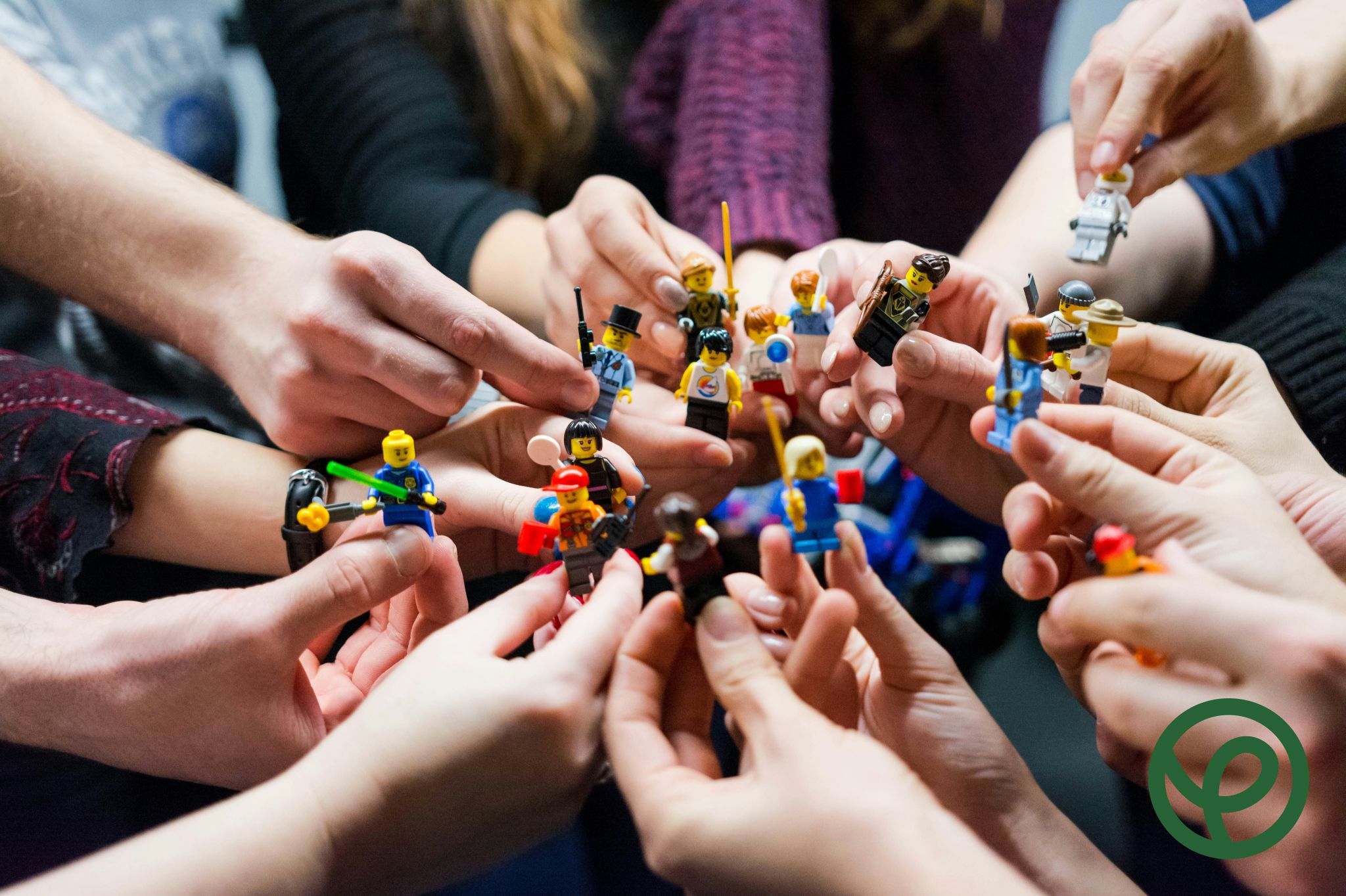
    • The “Silent Lego Challenge” – teams build a structure without talking. Spoiler: chaos still happens, but it’s the quiet kind.

    • “Compliment Jenga” – every removed block means you have to give a genuine compliment.

    • “Desk Pet Adoption” – participants create tiny clay mascots to represent their team mood; introverts excel at deep character backstories.

    • “The Post-It Fortune Teller” – everyone writes a future prediction for the team, anonymously. Cue existential laughter.

    Silly? Yes.

    But shared laughter is a kind of glue — and it dries fast.


    Wrapping the thread

    Building inclusive team experiences isn’t about dimming the lights for introverts or banning enthusiasm. It’s about balance — making space for both energy and ease.

    At Thread Events, we like to say: connection happens in the in-between moments — that quiet reflection after a big laugh, or that shared grin when someone finally says, “Okay, that was actually fun.”

    So, next time you plan a team event, remember: you’re not trying to turn introverts into extroverts.

    You’re just giving everyone a thread to hold onto.


    (Thread Events helps teams design experiences that connect, not overwhelm. Want to see what your next workshop could look like? Check out our Event Gallery or join an upcoming free session.)
  • The Day We Let AI Run Our Brainstorm (and It Made Us a Playlist Instead)

    The Day We Let AI Run Our Brainstorm (and It Made Us a Playlist Instead)

    If you’ve ever run a brainstorming session with a dozen caffeinated humans, you know the vibe: sticky notes everywhere, marker fumes in the air, and someone inevitably writing “synergy” on the whiteboard like it’s 2003.

    So naturally, we at Thread Events thought — what if we let AI handle it?

    After all, we’re in the business of helping teams communicate better. Surely a silicon-based life form could show us a thing or two about creative collaboration… right?

    Spoiler: our AI made us a playlist.

    A surprisingly good one, actually.


    It started as an experiment (and maybe a dare)

    We were prepping for a new client workshop — a corporate innovation team that wanted something “fresh, fast, and futuristic.” One of us (definitely the one who’d had two cold brews before 10 a.m.) said, “Why don’t we let AI run the brainstorm this time?”

    Cue nervous laughter.

    Cue curiosity.

    Cue us opening a browser tab like we were summoning a digital spirit.

    We fed our friendly algorithm a prompt:

    “Generate creative event ideas that build trust and collaboration between hybrid teams.”

    Then we sat back, pens down, pretending to look open-minded.


    The first five ideas were… ambitious

    1. “The Quantum Trust Experiment.”

      “Participants exchange Schrödinger’s cat boxes to explore uncertainty in teamwork.”

      (We decided HR might not approve.)

    2. “Synchronized Spreadsheet Dancing.”

      “Teams choreograph formulas to music.”

      (We did briefly consider it.)

    3. “The Silent Meeting Challenge.”

      “A full hour of teamwork without speaking — only emojis.”

      (Half our Slack channels already qualify.)

    4. “Build Your Manager Out of Cardboard.”

      (This one got applause. Unclear why.)

    5. “Playlist of Collaboration.”

      “Each participant adds one song that represents teamwork.”

      (We paused. This one actually felt… doable.)

    AI had accidentally pitched the most human idea in the list.


    The pivot: from brainstorm to beat-storm

    So we ran with it.

    We turned our strategy workshop into a music-based team exercise.

    Every participant chose one song that captured their team’s current dynamic — whether that was Eye of the Tiger or Help! by The Beatles. Then, together, they built a shared playlist of “team vibes.”

    It was part therapy, part chaos, part karaoke — and the results were absurdly wholesome.

    Someone chose Under Pressure (“because deadlines”), another picked Fix You (“because empathy”), and one brave soul added Smells Like Team Spirit purely for the pun.

    By the end, we had a 23-song journey that told the story of their workplace in music form.

    And weirdly enough, it worked. People opened up, laughed, and discovered each other’s moods without a single PowerPoint slide.


    What we learned about humans (and AI)

    1.

    AI is a mirror, not a magician

    When AI suggested a “playlist of collaboration,” it wasn’t creative by accident — it reflected back something deeply human: the need to express connection through rhythm.

    Sometimes what looks like randomness is just a remix of what we already care about.

    2.

    The best ideas sound a little stupid at first

    That’s our new motto. If everyone nods immediately, you’re playing it too safe. If half the room looks skeptical but curious, now you’re onto something.

    “Synchronized Spreadsheet Dancing” might still happen someday. Don’t tempt us.

    3.

    Introverts loved it

    Remember our post about designing for introverts? This was one of those moments.

    Nobody had to perform or shout. They just shared songs, listened, and explained why those tracks mattered.

    Connection, without the noise.


    The playlist lives on

    A funny thing happened after that session: the client actually kept using the playlist.

    They updated it after each big milestone — launching new tracks for each project phase.

    By month three, it had become a running joke and a cultural artifact.

    Now, when new hires joined, they got a link to the “Team Vibes” playlist before their induction pack.

    Honestly? That’s the kind of tradition you can’t engineer. You just make space for it to appear.


    The aftermath: we asked AI for feedback

    After the event, we asked our algorithm what it thought of its own brainstorm outcome.

    We got this actual response (cleaned up for readability):

    “Collaboration is rhythm. Human teams move best when they listen to each other. The playlist is a metaphor.”

    We’re not saying the AI is sentient.

    We’re saying if it starts a podcast next week, we’ll be subscribers.


    What you can steal from our chaos

    Here are a few Thread-approved takeaways for any team planning a creative session (with or without robots):

    1. Let go of control early.

      The best sessions have a little unpredictability. AI is just one way to manufacture that. (So are dice, random word generators, or pulling suggestions from a hat.)

    2. Give meaning to the mess.

      A playlist, a mural, a post-it wall — whatever collective artifact you make, keep it. Let it grow with your team. Tangible memories build culture.

    3. Don’t over-optimize.

      The goal isn’t efficiency; it’s discovery. You don’t measure success by how fast you finish, but by how long people keep talking afterward.

    4. Trust the weird.

      The “bad ideas” are often icebreakers for the real ones. Laughing together is progress too.


    For the data-minded

    Because no Thread Events session is complete without a bit of nerdy follow-through, we analyzed the final playlist:

    • Average BPM: 107 (energetic but not manic)

    • Most common theme: Overcoming obstacles

    • Number of “explicit” songs accidentally played over lunch: 1 (we regret nothing)

    The takeaway? Team energy can be quantified — but it’s the qualitative stuff that actually sticks.

    (Also, apparently everyone loves Fleetwood Mac.)


    Why this matters

    In a world obsessed with productivity, “play” is becoming a radical act.

    We keep hearing that AI will replace creativity — but what if its real superpower is to reveal it?

    That’s what our playlist proved. The algorithm didn’t steal our spark — it reflected it back, louder.

    The laughter that day wasn’t about tech; it was about recognition.

    We saw ourselves in the chaos.

    We realized our best ideas come from permission, not process.


    So, would we do it again?

    Absolutely.

    Though next time, we might limit the AI’s access to Spotify.

    And maybe not let it name the event again — “Collaborathon 3000” was a little much.

    But the principle stands: sometimes, the smartest move a team can make is to stop taking itself so seriously.

    Because when you loosen the reins — when you let curiosity (or a confused algorithm) lead — that’s when creativity sneaks in.

    And if it shows up carrying a playlist called Team Bangers Vol. 1, well, you might just have your next workshop theme.


    Thread’s final reflection

    At Thread Events, we help teams communicate — not by adding more meetings, but by designing moments that make people feel connected again.

    The AI didn’t make us redundant.

    It reminded us why we love doing this in the first place: because humans are gloriously unpredictable.

    And no machine will ever beat the sound of 12 people laughing at the same terrible idea — together.


    (If you’d like to experience a little structured chaos yourself, check out our upcoming Creative Collaboration Labs — no trust falls, no forced karaoke, just good ideas and maybe a great playlist.)

  • We Tried 5 Team-Building Exercises So You Don’t Have To (Here’s What Actually Worked)

    We Tried 5 Team-Building Exercises So You Don’t Have To (Here’s What Actually Worked)

    If you’ve ever Googled “best team-building activities”, you’ve seen the nightmare fuel: stock photos of people mid–high-five, clip art lightbulbs, and sentences like “Build trust with blindfolds!” No thanks.

    At Thread Events, we live and breathe team experiences. So we did what any slightly unhinged, deeply curious event agency would do — we tested the classics. The good, the bad, and the mildly traumatic.

    Here’s what happened when we tried five of the most popular team-building exercises.

    And, more importantly, what actually worked.


    1. The Trust Fall

    Verdict: Physically safe, emotionally dicey.

    We started with the one that launched a thousand HR disclaimers: the trust fall.

    You stand with your back to your team, cross your arms, and try to believe they’ll catch you. In theory, it’s about faith. In practice, it’s mostly about anxiety, core strength, and the sound of someone nervously laughing right before impact.

    To everyone’s credit, nobody hit the ground. But the post-fall silence? Deafening.

    Everyone smiled politely, then immediately checked Slack like nothing happened.

    What we learned: Trust isn’t built in one dramatic moment. It’s built quietly, through consistency — showing up, following through, and yes, remembering whose turn it is to refill the coffee pods.

    Better idea: Try a compliment circle. It’s weird for 20 seconds, then genuinely uplifting. No one risks a concussion.


    2. The Marshmallow Tower

    Verdict: Surprisingly brilliant (and delicious).

    You get spaghetti, tape, string, and one marshmallow. Build the tallest freestanding tower you can.

    It’s one of those “simple but deep” exercises that reveals everything about a team in 15 minutes flat. The designers started sketching blueprints. The engineers debated tensile strength. Marketing immediately named our tower Project Elevate.

    Halfway through, someone ate the marshmallow “for morale.” By the end, our structure leaned like the Tower of Pisa — but the room was buzzing. People were laughing, collaborating, arguing constructively.

    What we learned: Constraints make creativity fun. Give people too much freedom and they freeze. Give them tape, sugar, and a countdown clock, and they come alive.

    Would we do it again? In a heartbeat. Preferably with more marshmallows.


    3. Personality Bingo

    Verdict: Fun until someone gets too real.

    Each bingo square was a prompt like:

    • “Owns more plants than friends.”

    • “Has cried during a Zoom call.”

    • “Once said ‘per my last email’ and meant it.”

    You had to find coworkers who matched the traits. At first, it was pure chaos — laughter, confession, bonding over shared caffeine addictions. But things took a turn when someone yelled, “Wait, who put ‘secretly updating their résumé’?” and suddenly we were all taking a long, thoughtful sip of water.

    What we learned: Vulnerability is powerful — but timing is everything. The line between “funny honesty” and “accidental therapy” is razor thin.

    Better idea: Keep it light. Prompts about coffee, playlists, or desk décor keep the energy playful without diving into people’s souls.


    4. The Silent Line-Up

    Verdict: The surprise hit.

    Rules: Without talking, line up by birthday, height, or time spent at the company.

    Sounds simple. It’s not. Within minutes, the room turned into a silent movie — wild gestures, exaggerated pointing, confused facial expressions. Someone tried to mime “August” by pretending to fan themselves. Another did the “shrug and hope” routine.

    But something magical happened halfway through. We stopped laughing at each other and started reading each other’s cues. The silence became teamwork.

    When we finally nailed the order, we didn’t cheer — we just smiled and nodded. Like monks who’d achieved enlightenment via body language.

    What we learned: You don’t always need words to connect. Sometimes the best communication happens when everyone’s forced to actually pay attention.

    Would we do it again? Absolutely. And maybe record it for the blooper reel.


    5. The Escape Room

    Verdict: High drama, high payoff.

    To finish, we went big: lock the team in a themed puzzle room with an hour to escape.

    The introverts quietly scanned the room for clues. The extroverts started giving unrequested motivational speeches. Someone yelled, “I found a key!” every three minutes, even when it was just a paperclip.

    We argued, overanalyzed, panicked, and — somehow — solved the final lock with five minutes to spare. When that door clicked open, it felt like we’d just launched a startup together.

    What we learned: Real collaboration thrives under mild chaos. The right amount of stress sharpens focus, reveals leadership, and turns random coworkers into a squad.

    Would we do it again? Definitely. Just not with people who refuse to read instructions.


    Our Totally Unscientific Summary

    After all the sweat, laughter, and light existential dread, here’s the simple truth:

    The best team-building exercises don’t feel like team-building.

    They feel like play.

    The more natural and low-stakes the activity, the faster people relax — and once people relax, genuine connection sneaks in.

    Here’s how our final ranking shook out:

    • Top picks: Silent Line-Up and Escape Room — both chaotic in the right ways.

    • Runner-up: Marshmallow Tower — silly but effective.

    • Skip next time: Trust Fall (we’ve evolved).

    • Proceed with caution: Personality Bingo — fun if you don’t accidentally trigger a midlife crisis.


    Thread’s Takeaway

    Team-building doesn’t have to mean awkward icebreakers or motivational posters.

    It’s about designing moments of shared discovery — that tiny spark when people stop acting like colleagues and start acting like a team.

    The trick is to balance structure and spontaneity:

    • Add a clear goal, but don’t over-script it.

    • Create gentle pressure, not panic.

    • Reward laughter, not performance.

    At Thread Events, we believe the best team-building happens when everyone forgets they’re at “an event” and just has fun together.

    You don’t need matching T-shirts or inspirational slogans.

    You just need a bit of time, a dash of chaos, and a willingness to look silly for a good reason.


    (Want help designing a workshop your team won’t secretly dread? Check out our Team Connection Labs — no blindfolds, no buzzwords, just experiences that actually work.)

  • The 3 Types of People at Every Workshop (and Why You Need All of Them)

    The 3 Types of People at Every Workshop (and Why You Need All of Them)

    You can plan the perfect agenda, design the prettiest slide deck, and order the most ethically sourced muffins in Melbourne — but the moment people walk into your workshop, the energy changes.

    Because every session, no matter the topic, instantly divides into three archetypes. They’re universal. Eternal. The holy trinity of group dynamics.

    Meet the trio you’ll see at every team workshop — and why your event would fall apart without each of them.


    1. The Over-Sharer

    Motto: “Can I just say something real quick?”

    Vibe: Extroverted enthusiasm mixed with main-character energy.

    You’ll spot them immediately. They arrive early, sit near the front, and say “love this!” at least twice before morning tea.

    By the first exercise, they’ve told a story that starts with, “This reminds me of when I was in Bali…” and somehow ends with, “so yeah, trust is super important.”

    It’s easy to roll your eyes, but Over-Sharers are vital. They set the tone. Their energy gives permission for others to loosen up. They’re the spark that gets the conversation moving when everyone else is still evaluating the catering options.

    How to work with them:

    • Give them outlets — facilitator roles, icebreaker leads, or the whiteboard marker.

    • Acknowledge their enthusiasm without letting them monopolize. (“That’s a great point — who else has a different take?”)

    • Remember: their stories create psychological safety. People see passion and realize it’s safe to be human.

    Why you need them: Without them, the first hour of your workshop would sound like an email thread titled “Re: Re: Following up.”


    2. The Skeptical Spectator

    Motto: “What exactly is the point of this?”

    Vibe: Arms crossed, heart open (eventually).

    They walk in with cautious optimism — or maybe just caution. They’ve been to too many “transformational” workshops that involved sticky notes and emotional oversharing. Their internal monologue? “If there’s a trust fall, I’m out.”

    At first, they seem disengaged. They’ll hover at the edge of group activities, pretending to take notes on their phone. But here’s the secret: they’re observing everything. They’re testing if this is genuine or another corporate fad.

    Then, about 40 minutes in, something shifts. Maybe it’s the quiet exercise where people write down what they value most about teamwork. Maybe it’s the subtle humor in the facilitator’s story.

    Suddenly, they speak up.

    And when they do, everyone listens — because they’ve earned it.

    How to work with them:

    • Don’t push. Let them find their moment naturally.

    • Offer logic before emotion: explain the “why” behind activities.

    • Pair them with open-minded teammates — not to convert them, but to build mutual respect.

    Why you need them: Skeptics keep the group grounded. They stop the session from drifting into “rah-rah” territory. They ask the questions others are too polite to voice, which makes the insights real.

    Also, nothing feels more rewarding than seeing them genuinely smile by the end.


    3. The Silent Strategist

    Motto: “I’ll just listen for a bit.”

    Vibe: Quiet confidence with ninja-level observation skills.

    They don’t dominate conversations — they distill them. While others are swapping stories or debating frameworks, the Silent Strategist is connecting dots you didn’t even know existed.

    They rarely jump in mid-discussion, but when they do, it’s with a one-liner that makes everyone go, “Oh… yeah, that’s actually it.”

    They’re the ones who write the clearest notes, draw the neatest diagrams, and remember the tiny comment someone made that turns out to be the key insight.

    How to work with them:

    • Give space for reflection. Silent time isn’t dead time — it’s thinking time.

    • Invite written input (post-its, polls, chat box) before verbal sharing.

    • Recognize their input publicly. (“That was a great summary — can we build on that?”)

    Why you need them: They’re your anchors. They convert chaos into clarity. When the workshop ends, they’re often the ones who quietly document the next steps that everyone else forgets.


    The Workshop Triangle

    The Over-Sharer brings energy.

    The Skeptic brings honesty.

    The Strategist brings clarity.

    Together, they form what we call the Workshop Triangle — the perfect balance of movement, depth, and reflection.

    A session without Over-Sharers? Feels flat.

    Without Skeptics? Feels fake.

    Without Strategists? Feels chaotic.

    If you’ve ever left a meeting thinking, “That actually went somewhere,” it’s probably because all three showed up and balanced each other out.


    How to Design for All Three

    At Thread Events, we build every workshop with this triangle in mind. Here’s how you can, too:

    1. Warm-Up for the Over-Sharer

      Start with a fast, low-risk opener. Something that lets expressive people shine without dominating.

      Example: “Describe your team in three emojis.” Quick, harmless, funny.

    2. Structure for the Skeptic

      Always explain the purpose behind each activity. “We’re doing this exercise because…” goes a long way. Skeptics relax when they see logic, not fluff.

    3. Reflection for the Strategist

      End every segment with a quiet moment. Give everyone a minute to write or think before discussion. You’ll be amazed at how much smarter the conversation becomes.

    4. Mix Your Mediums

      Blend talking, moving, and writing. No one style suits everyone, so give each archetype a way to contribute comfortably.

    5. Celebrate Every Role

      At the end, name the balance: “We had big ideas, honest questions, and sharp takeaways.” That tells each person their energy mattered.


    The Thread Events Truth

    Every great workshop is a microcosm of a great team. You don’t need perfect alignment — you need dynamic tension.

    The Over-Sharer gets things moving.

    The Skeptic keeps things real.

    The Strategist makes it stick.

    That’s how trust is built: not in one style, but in the mix.

    So next time you’re hosting a session, don’t wish for everyone to behave the same.

    Wish for your triangle — and learn to love the friction.

    Because when energy meets reflection and meets reality, that’s when the real magic happens.

    And occasionally, someone brings muffins.


    (Want help designing a workshop that balances every type of personality? Explore our Facilitator Labs — custom-built sessions where enthusiasm, skepticism, and silence all get a seat at the table.)

  • Emoji Politics: How to React Without Starting a Slack War

    Emoji Politics: How to React Without Starting a Slack War

    (A survival guide for modern workplace diplomacy)

    There was a time when office politics happened by the water cooler. Now they happen in the reaction bar.

    One poorly placed 😅 and you’ve turned a harmless update into a full-blown Slack cold war.

    A 👍 can feel like passive-aggression.

    A 👀 might mean “interesting,” or “you’re in trouble.”

    And nobody really knows what 😬 means anymore — it’s the Schrödinger’s cat of emojis.

    At Thread Events, we spend a lot of time helping teams communicate better. And in 2025, that means teaching the new literacy: emoji diplomacy.

    Because your workplace might not be divided by hierarchy anymore, but it is divided by emoji energy.

    So let’s decode it — with love, humour, and only mild existential dread.


    1. The Passive-Aggressive 👍

    Ah, the classic. Once a symbol of encouragement, now a weaponized micro-expression.

    You know the moment. You send a thoughtful message:

    “Hey team, just looping back on that idea from yesterday.”

    And someone drops a lone 👍.

    No words. No punctuation. Just the thumb.

    You can feel the spreadsheet tension.

    The rule: Context is everything.

    • From your manager → probably “Good, carry on.”

    • From your peer → “Acknowledged, but I have feelings.”

    • From someone in legal → “Stop typing immediately.”

    If you must use 👍, soften it with warmth — add a 😊 or a “thanks!” to keep it human. Otherwise, you risk turning your affirmation into a digital sigh.


    2. The 😂 / 😅 Divide

    There’s a subtle hierarchy between these two.

    😂 says “This is genuinely funny.”

    😅 says “This is fine, but also slightly stressful and I’m coping.”

    Use 😂 with colleagues you know well — it builds connection.

    Use 😅 when you’re trying to keep humour professional.

    Mix them up and you might accidentally imply you’re laughing at the task, not with the person doing it.

    Also, never stack more than three 😂 in a row unless you’re actually on fire with joy. Two is the safe corporate limit.


    3. The Mysterious 👀

    The 👀 emoji is the workplace equivalent of side-eyeing over your monitor.

    It can mean:

    • “I’m watching this thread closely.”

    • “This is spicy, and I want updates.”

    • “Please stop before I have to involve HR.”

    Best practice: If you’re not sure, don’t drop 👀 — reply with words instead.

    Text still works! “Good point!” is infinitely safer than 👀, which can trigger a full-blown interpretive investigation in the group chat.


    4. The 🙌 vs 👏 Conundrum

    🙌 = celebration, joy, collective success.

    👏 = emphasis, sometimes sarcasm, occasionally rage.

    Example:

    “Great job getting that client onboard!” 🙌🙌

    → Team spirit, good vibes, probably cake.

    “Love when we forget to QA before launch 👏👏👏”

    → Absolute chaos.

    If you’re cheering someone on, use 🙌.

    If you’re calling something out, don’t.

    And if you’re unsure, play it safe with 🎉 — it’s the diplomatic immunity of emojis.


    5. The 😬 (A.K.A. “The Tense Smile”)

    No emoji has caused more miscommunication than 😬.

    Is it empathy? Embarrassment? Mild horror? All of the above?

    When someone confesses,

    “Just realized I merged to main without testing 😬”

    —it reads as solidarity.

    But when you drop 😬 under someone else’s serious update, it reads like judgment in emoji form.

    We recommend the 3-second pause rule: before you hit 😬, ask yourself, “Am I helping or narrating pain?” If it’s the latter, maybe just type “Oof.” It’s universal, safe, and emoji-neutral.


    6. The Reaction Pile-On

    You post a win in #general.

    First person reacts with 🎉.

    Then another adds 🔥.

    Then a third throws in 🚀 and 🥳.

    Suddenly your simple “client signed!” update looks like Burning Man.

    It’s well-intentioned chaos — but it can overwhelm the vibe and hide the actual message.

    Pro tip: Set a house rule in team channels: “Reactions are great — keep it to one per person.” That keeps it fun without turning Slack into a Times Square billboard.


    7. The “Late Like”

    The only thing worse than misusing emojis is delayed reacting.

    You drop a message on Monday.

    Silence.

    Then, on Thursday at 5:58 p.m., someone reacts with 👏👏👏.

    Now you’re spiraling: Are they just seeing it? Are they mocking me? Did they just scroll up 40 messages to shade me?

    There’s no good answer. But let’s all agree: if it’s been more than two business days, react privately or move on. Nobody needs emotional leftovers in #general.


    8. The Emotional Spectrum

    At Thread Events, we like to think of emoji use like a team dynamic diagram:

    • Heart emojis (❤️💚💜) → connection, empathy, appreciation. Use freely.

    • Fire / rocket (🔥🚀) → momentum, hype. Great for announcements.

    • Eyes / smirk (👀😏) → danger zone, tread carefully.

    • Skull (💀) → funny in memes, confusing in meetings.

    Your Slack reactions are emotional shorthand. Used right, they add nuance. Used wrong, they add noise.

    The goal isn’t to be robotic — it’s to be intentional.


    9. The Thread Whisperer’s Code

    Want to be the team emoji MVP? Follow these simple principles:

    1. Match energy, don’t mirror anxiety.

      If someone’s nervous, reassure — don’t amplify.

    2. Use reactions to support, not substitute.

      If a colleague shares something vulnerable, respond with words first. Emojis can follow.

    3. Default to kindness.

      When in doubt, choose warmth over wit. The “be nice” emoji combo (💛✨🙌) has never started a war.

    4. Use custom emojis sparingly.

      They’re fun until someone misreads “:blursed:” as “:insubordination:.”

    5. Don’t overreact to overreactions.

      Remember: intent gets lost in pixels. Assume good faith before firing back.


    10. Why Emoji Culture Actually Matters

    It might seem silly, but this stuff is culture.

    Reactions, tone, and micro-humour are how remote teams signal belonging.

    The way we communicate — even through pixels — shapes how safe, seen, and understood people feel.

    When someone reacts thoughtfully, it’s a tiny “I see you.”

    And in hybrid work, that’s priceless.


    At Thread Events, we believe emotional intelligence is the new team skill — and yes, that includes emoji literacy.

    So next time your teammate drops a rogue 👀, take a breath, assume the best, and maybe send a 🙌 back.

    Because in the end, the only real Slack war is between people who forgot they’re on the same team.


    (Want to take your team’s communication from 😬 to 🙌? Join our Digital Etiquette Labs — a fun, low-stakes workshop where we decode modern teamwork, one emoji at a time.)

  • The Secret Science of the Perfect High-Five

    The Secret Science of the Perfect High-Five

    (Because connection deserves good form)

    At Thread Events, we take teamwork seriously — but not too seriously. And there’s no better metaphor for human connection than the humble high-five.

    It’s fast. It’s joyful. It’s awkward in 1 out of 3 cases.

    And it might be the most under-studied piece of workplace body language since “hovering outside a meeting room pretending to look for your pen.”

    So today, we’re breaking down the science of the perfect high-five — why it matters, why it sometimes fails spectacularly, and what it says about your team.


    1. The Origins of the High-Five

    The high-five is said to have debuted in 1977 between two baseball players celebrating a home run.

    It was spontaneous, unnecessary, and completely infectious — three qualities we at Thread Events consider the foundation of great teamwork.

    It’s pure, wordless recognition: I see your effort. I share your win.

    And that’s exactly why it belongs in every thriving workplace (yes, even on Zoom… more on that later).


    2. Why the High-Five Works

    A good high-five isn’t just a sound effect — it’s a micro-ritual of connection.

    Here’s the psychology:

    • Eye Contact = Trust Loop.

      When two people lock eyes before a high-five, their brains synchronize momentarily. It’s mini team flow.

    • Impact = Endorphin Spike.

      The slap itself triggers touch-based reward signals. Dopamine says, “We did something good.”

    • Timing = Shared Focus.

      You can’t multitask a high-five. For half a second, everyone’s attention aligns. That’s cohesion distilled.

    In short: it’s not about hands. It’s about synchrony.


    3. Common High-Five Failures (and What They Reveal)

    Because no one gets it right 100% of the time.

    Here’s what we’ve observed in hundreds of Thread Events workshops (purely in the name of science):

    a. The “Drive-By.”

    The half-hearted mid-air wave that never connects.

    Usually from someone trying to be supportive and avoid eye contact.

    Diagnosis: low confidence, high social caution.

    Fix: make it a running joke; repetition builds comfort.

    b. The “Power Slap.”

    When someone commits too hard and leaves a handprint.

    Diagnosis: enthusiasm meets miscalibrated energy.

    Fix: say “save it for the pitch deck, legend.”

    c. The “Miss and Recover.”

    Hands whiff completely, followed by frantic laughter.

    Diagnosis: mutual awkwardness; over-anticipation.

    Fix: double down — go for a second attempt immediately.

    Research* shows a redemption high-five doubles the bonding effect.

    (Research may or may not be us testing it on a Tuesday.)

    d. The “Finger-Tangle.”

    A tragic tangle of limbs and confusion.

    Diagnosis: over-enthusiasm plus poor aim.

    Fix: establish pre-contact eye line. Aim for the elbow, not the hand — that’s an actual sports psychology trick.


    4. The Elbow Trick (A True Game Changer)

    Here’s the secret pro-tip used by athletes, facilitators, and anyone who doesn’t want to re-live high-five shame:

    Always look at the other person’s elbow.

    Your peripheral vision does the rest. It’s physics, muscle memory, and empathy combined.

    Next time you’re running a workshop, quietly mention it before a group cheer — watch the success rate skyrocket.

    Nothing says “well-run event” like a room full of perfectly synchronized slaps.


    5. Remote High-Fives: A Modern Tragedy

    We’ve all tried them — the awkward hand to the webcam followed by someone saying, “Wait, was that for me?”

    The digital high-five is, frankly, chaos. But it has its charm.

    You can simulate connection with reaction emojis (🙌) or synchronized gestures, but the real trick is intention.

    If you want the same emotional hit, narrate the moment:

    “High-five moment right there 👏👏👏.”

    It turns pixels into presence.

    Remember, enthusiasm doesn’t need physical proximity — just shared timing.


    6. The Team-Building Power of Micro-Celebrations

    What makes a team feel cohesive isn’t one big offsite. It’s a hundred small acknowledgements of effort.

    The high-five is the physical shorthand for “I appreciate you.”

    And the more you normalize that — in meetings, workshops, or hallway wins — the more connection becomes culture.

    Try this:

    • Celebrate progress, not just outcomes.

    • High-five (or emoji-five) small milestones.

    • Encourage cross-departmental high-fives — marketing and engineering, in peace at last.


    7. Advanced Techniques (for the Bold and the Brave)

    Once your team has mastered the basic slap, level up with these variations:

    • The Double-Tap: A quick slap-slap combo for big wins. Works best with mutual hype.

    • The Reverse Five: One person goes low, the other high — for dynamic duos only.

    • The Chain Reaction: Group high-fives that ripple around the room. Warning: contagious joy.

    • The Self-Five: When remote or solo, clap your own hands dramatically. Confidence booster, guaranteed.

    Do not attempt the Jump Five unless you have public liability insurance and a paramedic friend.


    8. How to Turn High-Fives Into Culture

    A culture of recognition isn’t built by HR policy — it’s built by repetition.

    When you celebrate small wins physically (or symbolically), you create a shared emotional rhythm.

    So, build micro-rituals into your workflow:

    • End every workshop with a group high-five moment.

    • Reward every project milestone with a “five-count” (five shoutouts in five seconds).

    • Create a Slack emoji version (:thread-five:) and drop it freely.

    Yes, it’s silly.

    That’s the point.

    Playfulness lowers defensiveness — and that’s when real communication starts.


    9. The Science, Summarized

    To recap the Thread Events Lab Findings™:

    • Aim for elbows, not hands.

    • Laugh at failure; it bonds you.

    • The bigger the grin, the better the connection.

    • Never underestimate a tiny gesture’s impact on morale.

    You don’t need another motivational slogan.

    You just need 0.4 seconds of shared joy and a satisfying smack.


    10. The Thread Takeaway

    A perfect high-five is 20% technique, 80% spirit.

    It says, “We’re in this together.”

    It reminds people that collaboration can feel human, light, and a little bit ridiculous — which is exactly how great ideas are born.

    So the next time your team nails a sprint, signs a deal, or just survives a week of meetings that could’ve been emails — stand up, look at someone’s elbow, and make it count.

    That sound you hear?

    That’s teamwork, landing beautifully.


    (Want your team to rediscover joy in the little things? Book our Connection Labs — no jargon, no buzzwords, just real humans high-fiving well and often.)

  • Team Spirit: It’s Not Just for Cheerleaders

    Team Spirit: It’s Not Just for Cheerleaders

    (Spoiler: it’s actually your company’s secret superpower)

    When you hear the phrase team spirit, what comes to mind?

    Maybe pom-poms, pep rallies, or someone shouting “Go team!” in a meeting that clearly didn’t need it.

    But here’s the thing — real team spirit isn’t loud. It’s not about matching T-shirts or motivational posters with eagles.

    It’s the quiet, invisible glue that keeps people moving in the same direction, even on messy days.

    At Thread Events, we’ve seen every kind of team under the sun — from startups in hoodies to enterprise giants with mission statements longer than novels. And the teams that thrive? They all have one thing in common: genuine, contagious, slightly weird spirit.


    1. What Team Spirit Actually Is

    Team spirit isn’t blind positivity or forced fun. It’s the shared belief that what we’re doing matters — and that we’d rather do it together than alone.

    It shows up in little ways:

    • Someone staying an extra 10 minutes to help a teammate fix a slide.

    • A designer saying, “That’s not my job, but I’ll give it a go.”

    • The group chat that lights up at 4 p.m. because someone’s dog just joined the Zoom.

    It’s not the same as culture — culture is what you write down.

    Spirit is what you feel.


    2. Why It Matters (Even When Nobody’s Watching)

    Team spirit is the invisible productivity multiplier.

    When people feel connected, they take risks. They share ideas faster. They recover from mistakes quicker.

    We ran a workshop once where half the team was new, and everyone was playing it safe. Then, during an activity, someone shouted “NAILED IT!” while holding up a piece of duct tape shaped like a trophy.

    The whole room cracked up.

    The tension vanished.

    From that point on, people were bold, silly, and surprisingly brilliant.

    That’s what spirit does — it gives permission to care.


    3. The 4 Building Blocks of Real Spirit

    a. Shared Struggle

    Teams bond more through challenge than celebration.

    The tricky client, the tight deadline, the failed prototype — these are your emotional gym sessions.

    Don’t avoid the struggle; process it together.

    b. Tiny Traditions

    The most spirited teams have rituals:

    • Friday “Win of the Week.”

    • Monthly “Meme Review.”

    • The ongoing battle for who brings the best snacks to meetings.

    These seem small, but they turn routine into rhythm.

    c. Open Laughter

    Laughter doesn’t mean you’re not serious. It means you trust each other enough to drop the mask.

    If your team never laughs, it’s not because they’re all stoic — it’s because they don’t feel safe yet.

    d. Celebrating Weirdness

    Your quirks make you memorable.

    The coder who quotes movie lines in code comments. The manager who has a playlist called “PowerPoint Bangers.”

    These little oddities are the colour in your company’s black-and-white org chart.


    4. The Myth of “Forced Fun”

    Let’s be honest — we’ve all been scarred by a mandatory “team bonding” day.

    The scavenger hunt nobody wanted. The trust exercise everyone dreaded. The one person who tried too hard to be the “fun boss.”

    Forced fun doesn’t build spirit — it drains it.

    Why? Because true spirit is voluntary. It’s spontaneous, organic, and occasionally chaotic.

    If people are laughing with the activity, not at it, you’ve nailed it.

    If they’re checking the time between icebreakers, it’s time to rethink your strategy.


    5. How to Spark Team Spirit (Without Cringe)

    We’ve tested hundreds of approaches at Thread Events, and these are the ones that actually work:

    • Start with authenticity. Acknowledge the awkwardness out loud. (“Yes, this is a workshop. Yes, we’re doing this together. Yes, there will be snacks.”)

    • Design for participation, not performance. Everyone should have a role, even small ones.

    • Add a touch of play. Not competition — play. Games, creative challenges, funny metaphors. Play unlocks creativity faster than a whiteboard.

    • End with reflection. Spirit without reflection burns out. Always give space for a quiet, grounded “what did we learn here?” moment.

    You’ll be surprised how fast “another workshop” turns into “that thing we still talk about months later.”


    6. The Spirit Spectrum

    We like to think of team spirit on a sliding scale:

    • Low Spirit: Meetings feel heavy. Nobody volunteers ideas. Coffee consumption spikes.

    • Medium Spirit: People participate, but it’s polite. Jokes land at 60%.

    • High Spirit: People interrupt each other with good ideas, cheer each other’s wins, and say “we” more than “me.”

    Most teams hover in the middle — and that’s fine. The goal isn’t constant cheerfulness (that’s exhausting). It’s sustainable, grounded enthusiasm.

    If your team can laugh and disagree respectfully in the same meeting, congratulations — that’s healthy spirit.


    7. Spirit Is Contagious

    You don’t have to be the team clown to set the tone.

    Spirit spreads quietly. One person showing genuine excitement or vulnerability gives everyone else permission to do the same.

    We’ve seen whole departments shift after one brave manager started ending updates with “Who wants to give the next shoutout?”

    Spirit starts with one spark — and multiplies by attention.


    8. Why Teams Lose It (and How to Get It Back)

    Spirit fades when:

    • Everything becomes transactional.

    • Wins aren’t celebrated.

    • Feedback only happens when something’s wrong.

    You rebuild it by re-humanizing the work.

    Celebrate something small. Ask someone’s opinion. Send a GIF instead of a formal reply once in a while.

    Spirit isn’t lost — it’s just waiting for someone to light it again.


    9. What Spirit Looks Like in the Wild

    We’ve seen it in unexpected places:

    • The finance team that sings happy birthday off-key every month.

    • The IT crew that renamed the Wi-Fi networks after their pets.

    • The remote team that starts each Monday with a meme-off.

    These aren’t just quirks — they’re the fingerprints of connection.

    When people feel safe enough to be playful, that’s when you know the culture’s working.


    10. The Thread Takeaway

    Team spirit isn’t a “nice-to-have.” It’s the heartbeat of collaboration.

    It’s how ideas survive bad Wi-Fi, tough clients, and that one calendar invite called “Alignment Meeting #6.”

    When people care — about each other, the mission, and the small wins along the way — your company becomes unstoppable.

    So yes, maybe we are a little like cheerleaders after all.

    But instead of pom-poms, we use sticky notes, playlists, and a shared sense that what we’re doing together actually matters.

    Go team.


    (Want to reignite your team’s spark? Join one of our Spirit Labs — designed for teams who are ready to laugh, reconnect, and remember why they like working together in the first place.)

  • What Happens When You Give a Team 10 Balloons and No Instructions

    What Happens When You Give a Team 10 Balloons and No Instructions

    (Spoiler: science, sociology, and mild chaos ensue)

    There’s something oddly beautiful about human behavior under pressure. Or in our case — under helium.

    At Thread Events, we love experimenting with how teams think, collaborate, and communicate when there’s just enough structure to be dangerous.

    So one Friday afternoon, we gave a workshop group a simple challenge:

    You have 10 balloons. You have 10 minutes. Do whatever you want.

    No rules. No objectives. No prizes.

    Just bright colors, squeaky rubber, and open space.

    Here’s what happened.


    1. The Immediate Panic

    Within 15 seconds, you could see personalities emerge.

    • Half the group froze, waiting for “the real instructions.”

    • A few optimists started inflating balloons because, well, it felt productive.

    • One guy immediately tried to juggle and popped two.

    • Someone asked, “Wait, is this a metaphor?”

    The first stage of any unstructured exercise is existential confusion.

    People hate not knowing the goal — it’s how our brains are wired. But that discomfort? That’s where creativity starts.


    2. The Power Vacuum

    By minute two, natural hierarchies started to form.

    A self-appointed “leader” emerged with the confidence of someone who once managed a group project.

    “Let’s build something!” they declared, inflating balloons with CEO-level conviction.

    Meanwhile, a quieter sub-team formed at the corner table, tying knots with quiet precision. Another started testing static electricity on the wall. A fourth group just… drew faces on them.

    Without realizing it, we were watching a microcosm of workplace culture.

    • The Directors: loud, visionary, chaotic.

    • The Makers: hands-on, detail-driven, calm.

    • The Critics: skeptical, questioning every decision.

    • The Artists: creatively unhinged, bless them.

    Every great team has all four. The trick is letting them coexist long enough to make something worthwhile.


    3. The Breakthrough Moment

    At around minute five, something clicked.

    Someone tied the balloons into a chain. Another said, “What if we made a bridge?”

    Then suddenly, the energy shifted from “What are we doing?” to “Let’s see if this works.”

    Laughter replaced hesitation. People started improvising, building, and documenting their progress like proud scientists.

    A few balloons popped dramatically, prompting cheers instead of groans.

    By minute nine, they had built something vaguely resembling a sculpture — or a protest, depending on your angle. It didn’t matter. Everyone was in it together.


    4. The Debrief: What It Revealed

    When the timer buzzed, we asked the obvious question:

    “So… what just happened?”

    Responses varied:

    • “We collaborated!”

    • “We panicked, then adapted.”

    • “We never agreed on a goal but still built something cool.”

    • “I now deeply respect balloon engineers.”

    It was the perfect metaphor for modern teamwork.

    Because in most organizations, nobody hands you perfect instructions.

    You get half the tools, vague goals, and a lot of noise.

    And your success depends less on what you do — and more on how you respond when no one tells you how.


    5. Why This Works (Psychologically Speaking)

    Unstructured play taps into two powerful team mechanisms:

    a. Emergent Leadership

    When the task is unclear, true leaders don’t wait for permission — they model momentum. But equally important are the followers who stabilize and refine the chaos.

    b. Shared Problem Definition

    Before you can solve a problem, you have to agree on what the problem is.

    The balloon challenge forces that conversation instantly — and it’s more revealing than any personality test.


    6. The Beauty of “Pointless” Tasks

    The point of the balloon exercise isn’t the end result. It’s to watch how people create meaning out of nothing.

    Within 10 minutes, everyone goes from “This is dumb” → “Wait, this is fun” → “This might actually say something about our team.”

    We’ve repeated this with dozens of groups.

    Sometimes the balloons become a tower.

    Sometimes they become a game.

    Sometimes they just become chaos — and that’s okay too.

    Because the real outcome is laughter, curiosity, and the quiet realization that even without rules, people naturally want to connect.


    7. Lessons for Real Life

    Here’s what every team can take away from our noble experiment in balloon-based sociology:

    • Uncertainty isn’t failure. It’s a creative state — if you let it be.

    • Clarity emerges through doing, not debating.

    • Play reveals patterns faster than meetings.

    • No one likes a balloon pop, but everyone remembers it.

    If your team ever feels stuck in endless “strategy” mode, hand them something unexpected — clay, cards, or yes, balloons — and step back. You’ll learn more about collaboration in 10 minutes than in 10 slide decks.


    8. The Unexpected Bonus

    During one session, a team accidentally created a balloon “mascot” — a wobbly, grinning creature named Inflatey McTeamface.

    They brought him to their next meeting.

    Then to their next offsite.

    Six months later, he appeared in the background of their CEO’s LinkedIn post.

    Was he ridiculous? Yes.

    Did he boost morale? Absolutely.

    Did we start selling balloon mascots? …We’re thinking about it.


    9. The Thread Takeaway

    Give a team 10 balloons and no instructions, and you don’t just get laughter — you get data.

    You see who takes initiative, who listens, who adapts, and who quietly keeps things from falling apart (literally).

    You see the invisible dance of collaboration — and the joy that comes from making something out of nothing.

    In a world obsessed with productivity, sometimes the smartest thing you can do is hand people something useless… and let them surprise you.


    (Want to see what your team does with creative chaos? Book our Innovation Labs — playful, fast, and slightly unpredictable sessions that turn uncertainty into connection.)

  • Is Your Coffee Chat Actually a Team Meeting in Disguise?

    Is Your Coffee Chat Actually a Team Meeting in Disguise?

    (A deep dive into the most productive 20 minutes of your week)

    Somewhere between the calendar chaos of back-to-back “syncs” and “catch-ups,” a new ritual quietly emerged — the coffee chat.

    You know the one: that half-scheduled, half-spontaneous chat that starts with “let’s just grab ten minutes to connect” and somehow turns into 45 minutes of problem-solving, therapy, and mild gossip.

    At Thread Events, we’ve started noticing a pattern — these casual coffee chats often achieve what formal meetings never do: honesty, clarity, and actual momentum.

    So let’s talk about why the least official meeting on your calendar might be the most important one.


    1. The Disguise of Casualness

    Coffee chats feel harmless.

    No agenda. No slide decks. No “who’s taking notes?” energy.

    But that’s exactly what makes them powerful — they bypass the performance of professionalism.

    When people think they’re “off the record,” they relax. They speak like humans, not job titles.

    And suddenly, insights tumble out that would’ve been locked behind polite silence in a proper meeting.


    2. The Science of “Low-Pressure” Thinking

    Psychologists call it diffuse-mode thinking — the state your brain enters when it’s relaxed and creative rather than focused and defensive.

    That’s why so many breakthroughs happen while walking, showering… or sipping coffee.

    The brain’s guard is down, so connections form more freely.

    A good coffee chat is like creative jazz: improvised, responsive, and occasionally off-beat — but somehow it works.


    3. How Coffee Chats Accidentally Replace Meetings

    We’ve all seen it happen:

    Two people “just checking in” end up solving a cross-departmental bottleneck.

    Then, a week later, someone says in the actual meeting,

    “Oh, we already talked about that over coffee.”

    Cue the collective sigh of everyone who just realized the real decision already happened elsewhere.

    It’s not sabotage — it’s efficiency disguised as friendship.

    But it also exposes something deeper: our formal meetings often aren’t designed for real conversation.


    4. The Ingredients of a Legendary Coffee Chat

    Want to recreate that magic intentionally? Here’s the secret blend:

    a. Two people, max three.

    Add a fourth, and it becomes a committee.

    b. No shared doc.

    The moment someone opens Notion, the vibe is gone.

    c. A specific curiosity, not an agenda.

    Example: “What’s the real blocker on X?” not “Let’s align on priorities.”

    d. A time limit.

    Fifteen to twenty minutes is ideal — just long enough for one caffeine high and one good idea.

    e. A walk, if possible.

    Movement changes thinking. Some of the best brainstorming happens in motion.


    5. The Hidden Rules Everyone Intuits

    Every great coffee chat operates under a secret social contract:

    • No slides. If you open PowerPoint, you owe the other person a muffin.

    • No status updates. Save it for the all-hands.

    • No fake enthusiasm. This is the space for honesty.

    • You must buy the next round if you say “circle back.”

    This shared informality is what keeps it human — and surprisingly productive.


    6. Why Managers Should Pay Attention

    If you’re leading a team, treat coffee chats as cultural gold.

    They’re your barometer for trust and psychological safety.

    When people are talking casually — cross-level, cross-function — it means communication is flowing naturally.

    When coffee chats dry up, it’s often the first warning sign of silos or burnout.

    Great leaders don’t schedule more meetings. They make sure the right conversations are happening without needing an invite.


    7. The Dark Side (Yes, There Is One)

    Left unchecked, coffee-chat culture can also turn into shadow governance.

    That’s when decisions made informally never get documented, and half the team ends up asking,

    “Wait, when did we agree to that?”

    If your team’s coffee chats are replacing actual strategy time, it’s time to surface that energy — not suppress it.

    Encourage the spontaneity, but capture the outcomes.

    Otherwise, you’ll end up with the world’s most caffeinated communication gap.


    8. How to Harness Coffee-Chat Energy Without Chaos

    At Thread Events, we help teams channel this informal magic into structured collaboration.

    Here’s what we recommend:

    1. Start meetings with five minutes of “coffee chat mode.”

      A quick personal check-in lowers tension and builds connection.

    2. Encourage “micro-syncs.”

      Empower teammates to meet in pairs between bigger sessions — but share key insights afterwards.

    3. Design “coffee-style” workshops.

      Think low-tech, conversational, and fluid. No presentation decks. Just prompts, markers, and curiosity.

    4. Reward curiosity, not attendance.

      Great ideas rarely come from people following the calendar; they come from people following the conversation.


    9. Why It Feels So Good

    It’s not the caffeine — it’s the chemistry.

    A casual chat satisfies the three things every team craves:

    • Connection: You’re reminded that your coworkers are actual humans.

    • Clarity: Problems sound smaller when spoken over coffee foam.

    • Momentum: It’s easier to act when no one’s judging your phrasing.

    The ritual matters less than the rhythm.

    It’s about creating space where honesty doesn’t need a meeting invite.


    10. The Thread Takeaway

    Your best ideas aren’t hiding in the agenda — they’re floating in the moments between calendar blocks.

    So if your team keeps “accidentally” solving things over coffee, don’t fight it.

    Lean in. Learn from it.

    Those small, caffeine-fuelled chats are where culture happens — one espresso shot at a time.

    Because when you remove pressure, hierarchy, and bullet points, what’s left is what makes teams powerful in the first place: conversation.


    (Want to turn casual connection into creative fuel? Explore our Conversation Labs — Thread Events workshops that teach teams how to talk, listen, and build culture over coffee, not chaos.)

  • The Great Office Olympics: How to Build Team Spirit Without Breaking a Sweat

    The Great Office Olympics: How to Build Team Spirit Without Breaking a Sweat

    (Cardio optional, laughter guaranteed)

    Every workplace has its own flavor of chaos — the broken printer, the mysterious fridge yogurt, the Slack thread that just says “quick one?”.

    But every now and then, a rare idea cuts through the noise and unites everyone in glorious, unnecessary competition: The Office Olympics.

    At Thread Events, we’ve hosted dozens of these across companies big and small. They’re equal parts ridiculous, revealing, and surprisingly effective for team morale.

    Here’s how to build your own — minus the HR incident report.


    1. Set the Tone Early

    The first rule of Office Olympics: it’s not about winning. It’s about spectacle.

    The second rule: someone will get too competitive. Plan for that.

    Before you start, remind everyone that these games are about spirit, not skill.

    And always open with a tongue-in-cheek “Athlete’s Oath,” such as:

    “I swear to uphold the values of teamwork, hydration, and dramatic overreactions.”

    Cue laughter. Instant buy-in.


    2. Choose Events That Reward Chaos, Not Fitness

    The goal isn’t to find the fittest employee — it’s to find the funniest way to use office supplies.

    Some Thread-approved classics:

    • Rubber-Band Archery: Who can hit the sticky-note target from the furthest desk?

    • Chair Curling: Roll an office chair across the floor and see whose “athlete” lands closest to the line.

    • Spreadsheet Sprint: First person to format an entire table in brand colors without breaking a formula.

    • Stapler Shot Put: Self-explanatory. Just use soft landings.

    • PowerPoint Relay: One slide per teammate, each adding a new ridiculous animation.

    You’ll learn more about your coworkers in 15 minutes of Chair Curling than in six months of performance reviews.


    3. Embrace Spectatorship

    Every great Olympiad needs commentators.

    Nominate your loudest colleague as Head Announcer, hand them a megaphone (or just a pen for dramatic effect), and let them narrate the chaos:

    “And here comes Finance — strong form, questionable aim — oh! a clean hit on the recycling bin!”

    Spectators turn small wins into full-blown hero moments.

    Cheering builds belonging faster than any strategy workshop.


    4. Keep the Scoreboard Silly

    Competition is fun until someone starts calculating ROI on Post-It velocity.

    Our golden rule: points should be meaningless but memorable.

    Examples:

    • “+10 for commitment to the bit.”

    • “-3 for unnecessary spreadsheet macros.”

    • “Bonus medal for poetic commentary.”

    By the end, nobody knows who’s winning — and that’s how you know it’s working.


    5. Design for Inclusivity

    Not everyone wants to throw staplers or crawl under desks. That’s okay.

    Mix your events:

    • Creative rounds: Logo redesign in MS Paint.

    • Quiet rounds: Origami flag making.

    • Strategic rounds: Trivia about your own company (“How many versions of the logo exist?”).

    Remember: the point is shared laughter, not athleticism.

    If everyone can participate in their own way, you’ve nailed it.


    6. Add a “Half-Time Show”

    In every Office Olympics, energy dips around the 40-minute mark.

    Cue the halftime spectacle. Ideas we’ve seen work shockingly well:

    • Lip-Sync Battle (Solo or Team).

    • Dramatic Reading of Slack Messages (with permission).

    • The Printer Paper Fashion Show.

    You’ll know it’s a hit when your quietest engineer walks the runway wearing a stapled paper cape.


    7. The Unexpected Magic: Cross-Team Bonding

    Here’s the science bit: shared laughter triggers oxytocin — the trust hormone.

    The sillier the activity, the stronger the memory.

    That’s why “remember when Legal beat HR at Binder Toss?” becomes folklore long after the event ends.

    The Office Olympics work because they flatten hierarchy.

    For one afternoon, everyone’s just a competitor with bad aim and questionable form.


    8. Debrief Like Pros (Sort Of)

    After the games, gather everyone for closing “press conferences.”

    Each team must deliver a 30-second speech summarizing:

    • Their proudest moment.

    • Their biggest scandal.

    • Their official training plan for next year.

    You’ll get comedy gold and genuine reflections about teamwork under pressure.

    Then crown your winners with something absurd — tin-foil medals, paper-clip trophies, or a golden mouse-pad.

    The sillier the prize, the stronger the memory.


    9. Why It Actually Works

    Behind the balloons and bragging rights lies real psychology:

    • Play disarms ego. Everyone becomes equal when rules are ridiculous.

    • Micro-celebration builds cohesion. Shared fun = shared identity.

    • Failure becomes funny. That’s cultural gold.

    We’ve seen entire departments reconnect after a round of “Rubber-Band Archery.”

    Apparently, nothing bonds like missing a target together.


    10. The Thread Takeaway

    You don’t need another team offsite with buzzwords.

    You need a room full of adults laughing at how seriously they’re taking the Paper-Clip Relay.

    Because team spirit isn’t about performance — it’s about permission.

    Permission to play, to be ridiculous, to fail loudly and still high-five after.

    So blow up some balloons, clear some space, and light the metaphorical torch.

    The gold medal isn’t for speed — it’s for showing up, cheering hard, and remembering that connection feels best when it’s a little bit silly.


    (Ready to host your own Great Office Olympics? Try our Thread Playbook Labs — a hands-on session that helps teams build culture through play, laughter, and only mild competitive chaos.)