
(Spoiler: it doesn’t involve mandatory trust falls or forced karaoke)
At Thread Events, we’ve run hundreds of workshops designed to help teams connect — from high-energy innovation sprints to slow, reflective sessions where someone finally admits, “I actually hate icebreakers.” And every time we run a team-building event, one truth quietly emerges like a cat at a dinner party: introverts are watching everything.
They’re taking it in, analyzing the vibe, silently judging your playlist. They’re valuable, thoughtful, and essential to any healthy team — yet our industry has a long history of “energizer” events that make introverts wish for an urgent dentist appointment.
So, let’s fix that. Here’s how to design a team-building event your introverts will actually enjoy, rather than simply endure.
1. Start with “psychological oxygen”
Extroverts get energy from others; introverts recharge alone.
That doesn’t mean they dislike people — it means their batteries drain faster in high-stimulation environments.
When planning your event, treat quiet time the same way you treat coffee: essential, restorative, and not optional.
-
Offer reflection breaks between activities.
-
Leave open space in the schedule — literally label it “Solo recharge.”
-
Create a calm zone with comfortable seating or a silent creative activity like sketching or journaling.
It’s not about babying anyone — it’s about giving everyone the oxygen they need to participate fully.
2. Redefine “engagement”
Not everyone needs to wave their hands, shout ideas, or act out scenes from The Office to be engaged.
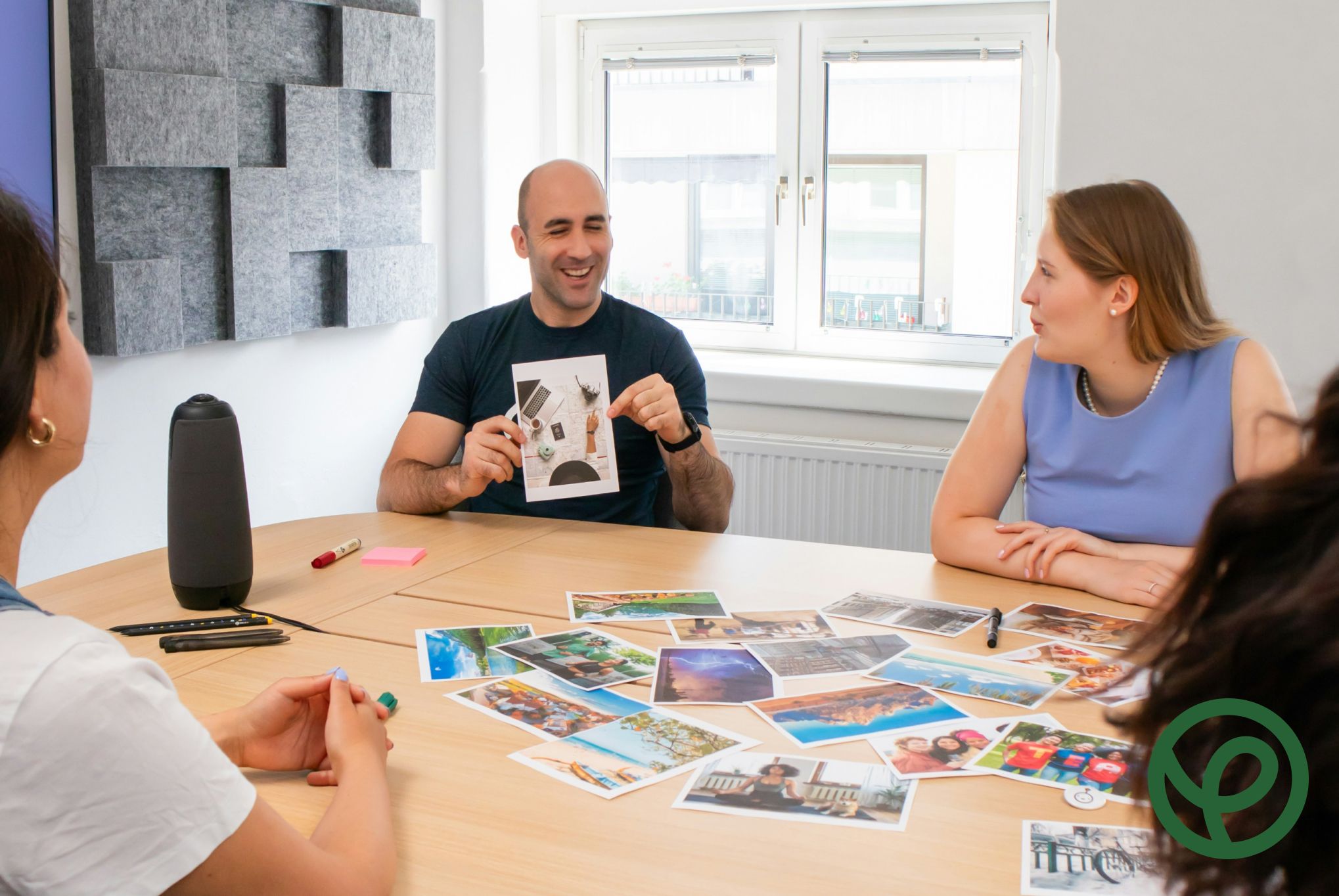
Introverts often contribute best through writing, designing, or small-group problem-solving. If you want genuine involvement:
-
Replace “shout out your ideas!” with sticky-note brainstorming or shared online docs.
-
Swap “team cheer” moments with quiet reflection prompts (“What surprised you most about today?”).
-
Let people volunteer for presentation roles rather than assigning them.
When you redefine engagement as thinking together instead of talking loudly at the same time, your whole team starts to shine.
3. Choose facilitators who can read a room
There’s an art to pacing energy. Great facilitators (like ours 😉) know when to keep momentum and when to let silence do its magic.
If your event leader senses a lull and immediately cranks up a high-five circle, that’s a red flag.
The best facilitators:
-
Notice when a group needs a breather.
-
Invite quieter voices through subtle cues (“I’d love to hear from someone who hasn’t spoken yet”).
-
Avoid spotlighting individuals unexpectedly — no “Tell us your most embarrassing moment!” nonsense.
Remember: psychological safety is built in moments of choice. Let people choose when and how to share.
4. Feed them well (and quietly)
Food is social glue — but buffet chaos can be overwhelming.
Consider setups that let people eat in smaller groups or pick seats naturally. Even better:
-
Offer labelled dietary options so no one has to ask awkward questions.
-
Skip the megaphone “Come grab food!” announcements.
-
Keep background music conversational, not nightclub-loud.
We’ve seen the magic that happens when someone’s halfway through a wrap and casually says, “Hey, that activity actually helped me see how we communicate under pressure.”
That’s the moment your event becomes more than a calendar block.
5. Use humour that invites, not excludes
A little silliness is powerful — but it should feel safe, not performative.
Light self-deprecation, funny observations about workplace quirks, or absurd creative prompts (“Design a mascot for your team’s collective mood”) all help people loosen up without pressure.
Avoid humour that relies on putting anyone on the spot. Nothing ruins a vibe faster than being laughed at when you thought you were just existing quietly in the corner.
If you want everyone to laugh, laugh with them — not at them.
6. Re-engineer your “icebreaker”
We’ve all met the dreaded icebreaker: “Share something surprising about yourself!”
That’s an instant anxiety trigger for half your team.
Instead, make it about curiosity, not confession:
-
“What’s something small that recently made you smile?”
-
“If your workday had a soundtrack, what’s track one?”
-
“You’re a new household object — what are you, and why?”
It sounds ridiculous — but it’s safe ridiculousness. The sillier the frame, the more equal the playing field. Everyone gets to be weird together.
7. Design with energy arcs, not chaos curves
Think of your event as a playlist: you wouldn’t start with heavy metal and end with a lullaby.
Structure matters:
-
Start warm and familiar. Small tasks, light humour, short bursts.
-
Move into creative challenge. Collaboration at peak energy.
-
Cool down. Reflection, feedback, takeaway moments.
When introverts see a rhythm they can trust — not constant surprise — they relax.
When they relax, you get their best ideas (and fewer mysterious “toilet breaks” that last the entire group activity).
8. Celebrate quietly, too
The wrap-up moment doesn’t need confetti cannons or champagne.
Recognition can be subtle but powerful: a thoughtful thank-you card, a highlights wall, or a digital photo reel that lets people remember the event without sensory overload.
Pro tip: introverts love asynchronous celebration — a follow-up email where they can react with emojis at their leisure is peak joy.
9. Measure success by comfort, not chaos
It’s tempting to judge events by noise level, laughter volume, or how many post-its are on the wall. But your best indicator of success might be what happens after everyone goes home.
Did the quieter people talk more in the next week’s meeting?
Did someone reference an idea from the workshop a month later?
That’s your ROI.
True connection doesn’t always look loud — sometimes it’s the quiet nod that says, “I get you.”
10. Bonus round: silly things that
actually
work
We’ve tested a lot of nonsense in the name of science (and fun).
Here are a few playful hits that surprisingly unite both introverts and extroverts:
-
The “Silent Lego Challenge” – teams build a structure without talking. Spoiler: chaos still happens, but it’s the quiet kind.
-
“Compliment Jenga” – every removed block means you have to give a genuine compliment.
-
“Desk Pet Adoption” – participants create tiny clay mascots to represent their team mood; introverts excel at deep character backstories.
-
“The Post-It Fortune Teller” – everyone writes a future prediction for the team, anonymously. Cue existential laughter.
Silly? Yes.
But shared laughter is a kind of glue — and it dries fast.
Wrapping the thread
Building inclusive team experiences isn’t about dimming the lights for introverts or banning enthusiasm. It’s about balance — making space for both energy and ease.
At Thread Events, we like to say: connection happens in the in-between moments — that quiet reflection after a big laugh, or that shared grin when someone finally says, “Okay, that was actually fun.”
So, next time you plan a team event, remember: you’re not trying to turn introverts into extroverts.
You’re just giving everyone a thread to hold onto.
(Thread Events helps teams design experiences that connect, not overwhelm. Want to see what your next workshop could look like? Check out our Event Gallery or join an upcoming free session.)